

Material is only the first part of the answer
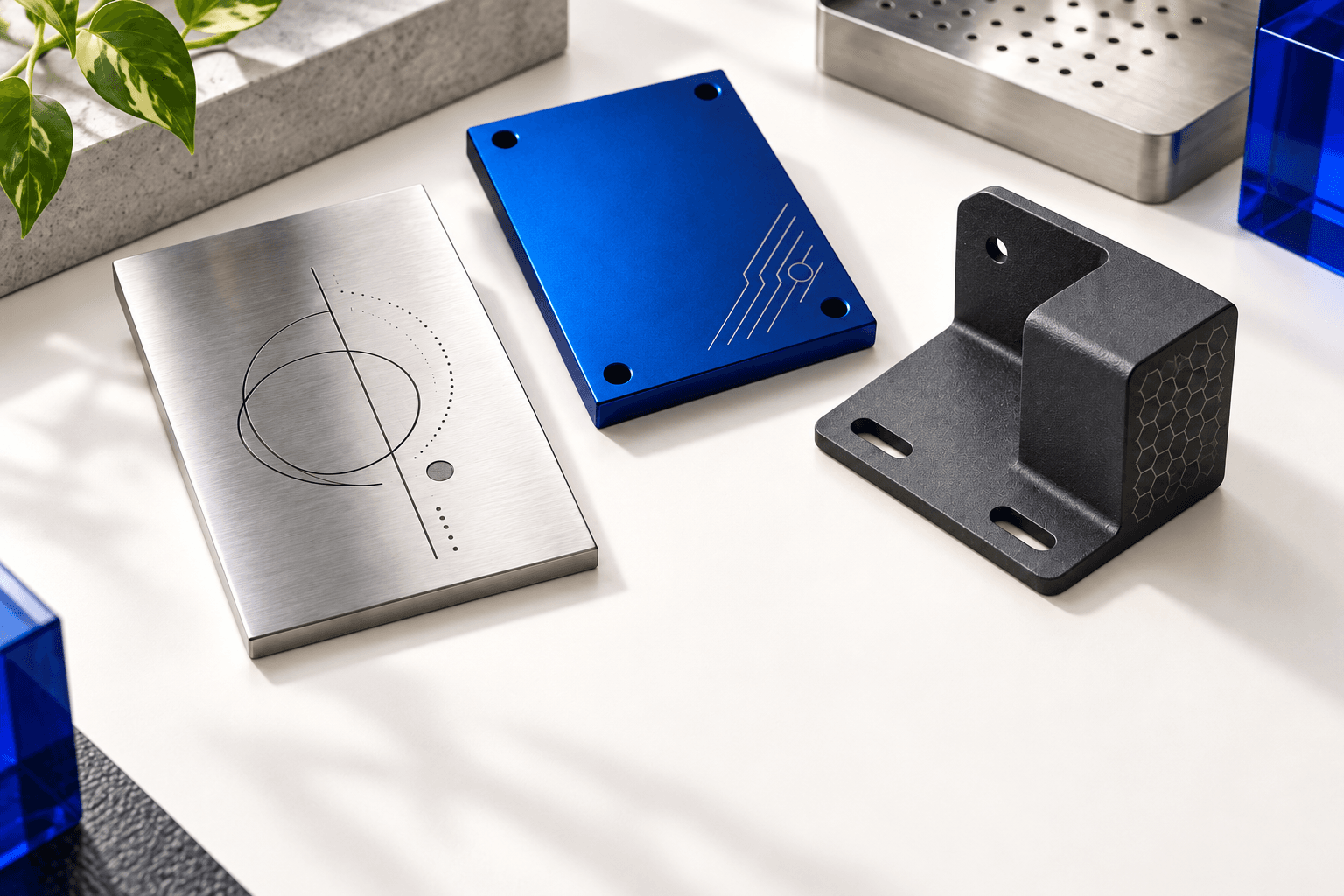
Saying that an item is metal does not describe a surface well enough for a working conclusion. Stainless steel, anodised aluminium, brass and powder-coated steel differ in texture, colour, coating and condition. Even two parts with the same material name may have different surfaces because of finishing, paint, anodising, protective layers or previous use.
If the exact grade is unknown, there is no need to guess. Send several clear photos in neutral light: the full item, a close view of the surface and an edge. Add anything known about the coating or origin. This creates a useful basis for an initial conversation.
- A photo of the whole item and a close view of the intended area.
- Material or coating name, if known.
- Any paint, anodising, lacquer, polishing or other layer.
- Quantity and data that should repeat or vary.
Geometry determines access
A flat plate, cylinder, angled bracket and a part with holes each create different constraints for a marking area. Edges, bends, slots, radii and raised features can limit the usable surface or alter how artwork is perceived. That is why the real shape and orientation matter alongside width and height.
You can simply draw a circle or arrow around the intended area in a photo. If a particular area must not be touched, say so at the start. This keeps the artwork discussion tied to the real part rather than transferring an assumption from someone else’s example.
Preparing a series of metal parts
For a series, separate fixed and variable data. A logo, title or contour may stay fixed; a number, date or identifier may change. Send changing values in a text file or table rather than inside a photograph, so sequence and characters can be checked clearly.
Before the series begins, it is useful to align one understandable version: the item, marking area, artwork and data list. If one batch includes parts with different coatings or geometry, identify them separately. This prevents transferring assumptions from one metal surface to another.
If a part already has signs of use, scratches or visibly different tones on the same surface, show that in the photos. These details may not be obvious in a wide shot but affect how a marking is perceived. A truthful description of the starting condition keeps the discussion attached to the actual part rather than an idealised sample.
Frequently asked questions
Is the material name enough for a review?
No. A meaningful initial review also needs photos, coating information, part geometry and the intended marking area.
Why send a photo when there is a drawing?
A drawing can show dimensions but not always the surface texture, condition or coating. Together they give a more useful basis for discussion.