

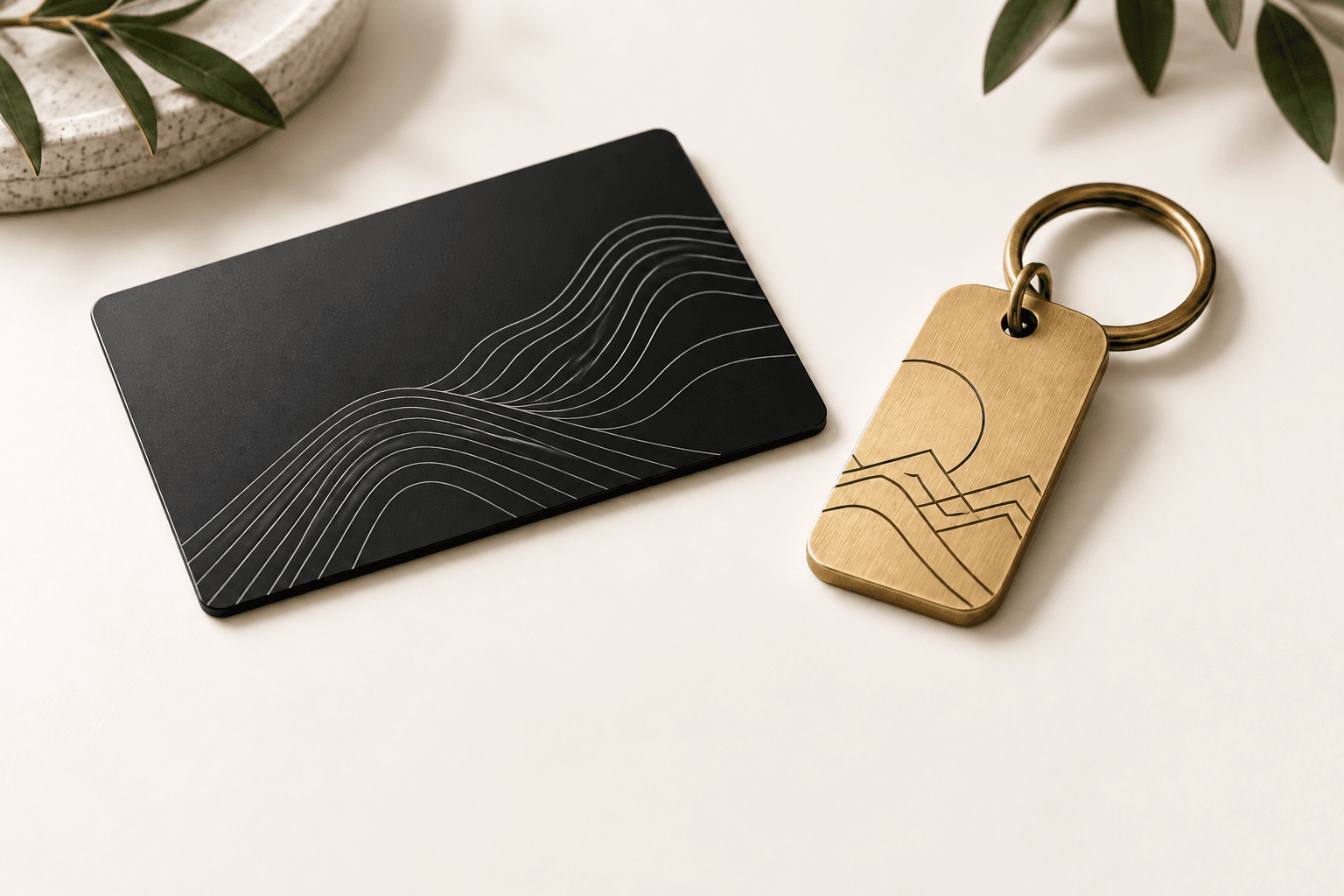
Choose one primary meaning
A personalised inscription works best when it can be understood in a few seconds. Decide what should remain central: a name, initials, a date, a short thank-you or an event. Trying to place several long phrases, a decorative typeface and an extra symbol on a small metal surface usually makes the composition harder to read.
Start with one or two options written in full. Check names, dates and keyboard layout before approval; these are the details most often noticed too late. If the inscription is in another language, send the final spelling rather than only a pronunciation.
- One main message: name, date, initials or short phrase.
- Checked spelling for names, numbers and special characters.
- A photo of the exact metal item that will be marked.
- The preferred location: face, edge, reverse or a metal insert.
Readability matters more than word count
Letter size depends on more than phrase length. The object shape, holes, corners, texture and free margins all matter. On a small metal tag, concise initials may read more clearly than a long greeting. A flat plate may allow a name and date, but it still benefits from space around the inscription.
Do not choose a decorative typeface only because it looks good on a phone. Thin strokes, tightly packed letters and small symbols need a review on the real surface. A calm composition with useful spacing is usually easier to read, photograph and recognise at first glance.
What to include in your message
Send a photo, the material if known, the inscription option and the preferred orientation. Also say whether this is one gift, a set of identical items or a series with different names. For a series, a separate list of variable data helps avoid spelling mistakes.
An example from another item cannot promise an identical look. Contrast, colour and usable area depend on the individual metal and coating. First the data and composition are reviewed, then an option can be agreed for your actual item.
If the gift has to be ready for a particular event, avoid changing the wording in several messages at once. Send one final version and mark it as the primary option. This is especially helpful for initials, dates and series with different names: everyone in the conversation sees one source of truth rather than several almost identical versions.
Frequently asked questions
Can I use a long greeting?
It can be discussed, but a small area usually benefits from identifying the essential part of the message. A photo and dimensions help assess the composition before approval.
Will every metal gift work the same way?
Surface, coating, shape and usable area vary. Send a photo of the item so the starting information can be reviewed instead of assuming from the material name alone.